Cloud POS vs Traditional POS UK – Complete Comparison Guide (2026)
Written by Calvin Lo, Founder of Aphelios Software | July 2026 | 9 min read
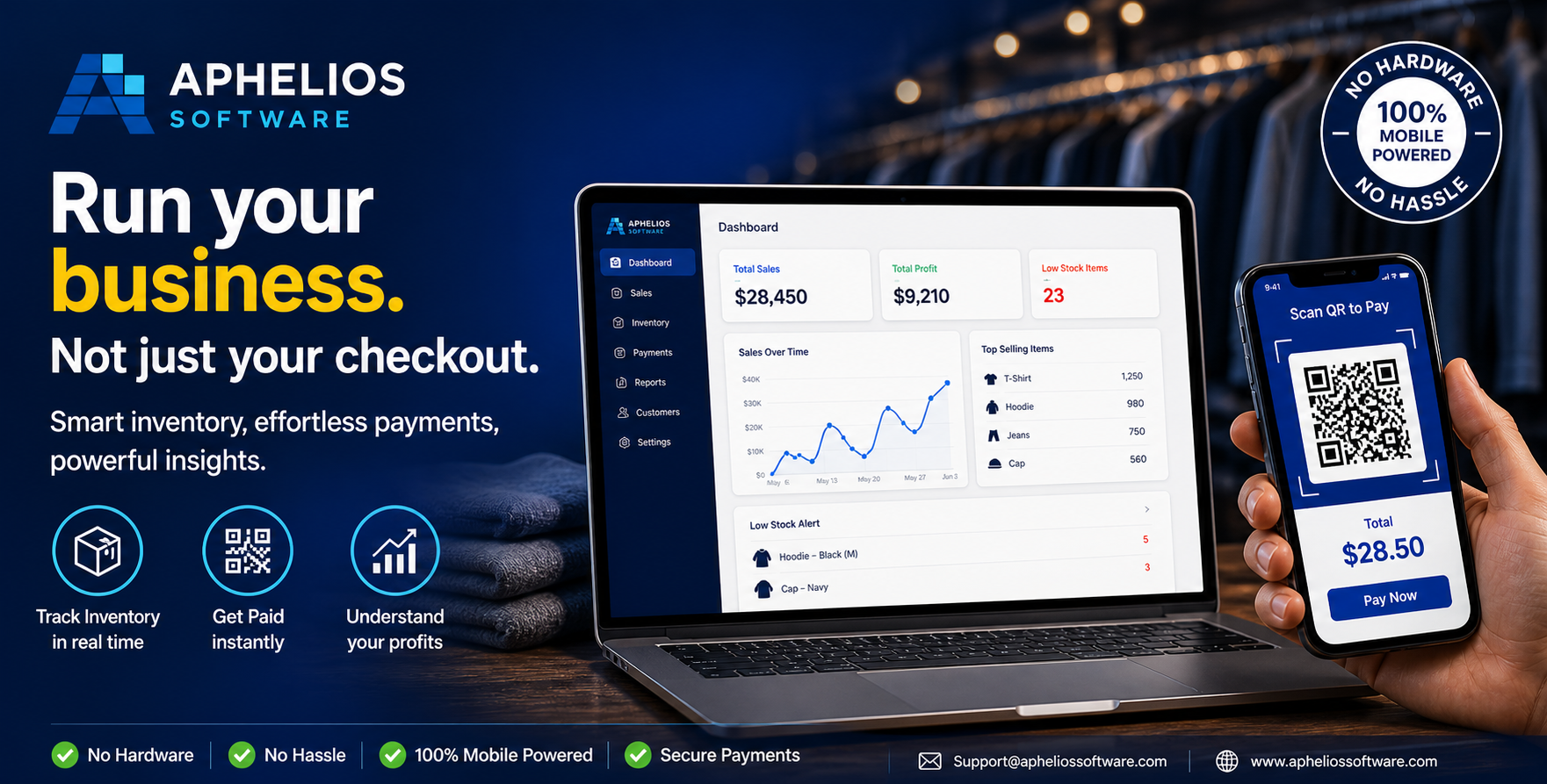
Cloud POS dashboard showing real-time sales, inventory and analytics in a single view
When choosing a point-of-sale system for your UK business, one of the first decisions you will face is whether to go with a cloud-based POS system or a traditional (legacy) on-premise POS system. Each approach has its own strengths and weaknesses, and the right choice depends heavily on your business type, budget, technical resources and operational needs.
This comprehensive guide compares cloud POS vs traditional POS systems across 12 critical criteria: cost, features, reliability, security, scalability and more: to help you make an informed decision for your UK business in 2026. For a round-up of the leading platforms, see our guide to cloud EPOS systems.
What Is a Traditional POS System?
Traditional POS systems, also known as legacy or on-premise systems, run entirely on local hardware installed at your business premises. The POS software is installed on a dedicated computer or terminal, and all data: sales records, inventory levels, customer information: is stored on a local server or hard drive within your shop.
These systems typically require a significant upfront investment in hardware (terminals, servers, printers, cash drawers) and software licences. Data is not accessible outside the physical location unless additional remote access tools: such as VPNs: are configured, which adds complexity and cost. Updates and backups must be performed manually or scheduled on the local server.
What Is a Cloud POS System?
Cloud POS systems (also called web-based or SaaS POS) run on remote servers and are accessed via the internet through a web browser or mobile app. You can use a cloud POS on any device: a tablet, phone, laptop or desktop computer. All data is stored securely in the cloud and synchronised in real time across all devices and locations.
Cloud POS systems like Aphelios Software typically operate on a monthly subscription basis with no large upfront costs. Updates, backups and security patches are handled automatically by the provider, and you can access your business data from anywhere with an internet connection. Modern cloud POS systems also include offline mode, allowing transactions to continue during internet outages.
Head-to-Head Comparison: Cloud POS vs Traditional POS
| Criteria | Cloud POS | Traditional POS | Winner |
|---|---|---|---|
| Upfront cost | £0 (use existing devices) | £500-3,000+ | Cloud |
| Monthly fees | £10-150 (predictable) | £50-200+ (plus maintenance) | Cloud |
| Access anywhere | Any device, anywhere | On-site only (VPN needed) | Cloud |
| Real-time sync | Instant across all locations | Manual/scheduled sync | Cloud |
| Automatic updates | Yes: no effort required | Manual, often extra cost | Cloud |
| Data backup | Automatic cloud backup | Manual or extra system | Cloud |
| Offline mode | Available (modern systems) | Works without internet | Draw |
| Local performance | Depends on internet speed | Fast (local processing) | Traditional |
| Scalability | Add locations instantly | New hardware each site | Cloud |
| Integrations | Built-in CRM, payments, e-com | Limited, custom dev needed | Cloud |
| Security | 256-bit SSL, auto patches | Depends on maintenance | Cloud |
| GDPR compliance | Provider-managed compliance | Your responsibility | Cloud |
| Hardware flexibility | Use phones, tablets, laptops | Dedicated terminals only | Cloud |
Cost Comparison: Cloud vs Traditional POS
The cost difference between cloud and traditional POS is substantial. Here is a realistic 3-year total cost comparison for a single-location retail shop:
| Cost Category | Cloud POS (Aphelios) | Traditional POS (Typical) |
|---|---|---|
| Year 1 hardware | £0 (use your phone) | £1,200 (terminal, server, printer, scanner, drawer) |
| Year 1 software | £359.88 (£29.99 × 12) | £600 (licence + maintenance) |
| Year 2 hardware | £0 | £0 (if no failures) |
| Year 2 software | £120 | £600 (maintenance) |
| Year 3 hardware | £0 | £200 (terminal repair/replacement) |
| Year 3 software | £120 | £600 (maintenance) |
| 3 Year Total | £360 | £3,200 |
| Total Savings | £2,840 saved with cloud POS | |
Over three years, a traditional POS system costs approximately 9x more than a cloud POS solution. For businesses with multiple locations, the savings multiply with each additional site.
Offline Mode: The Cloud POS Answer to Reliability Concerns
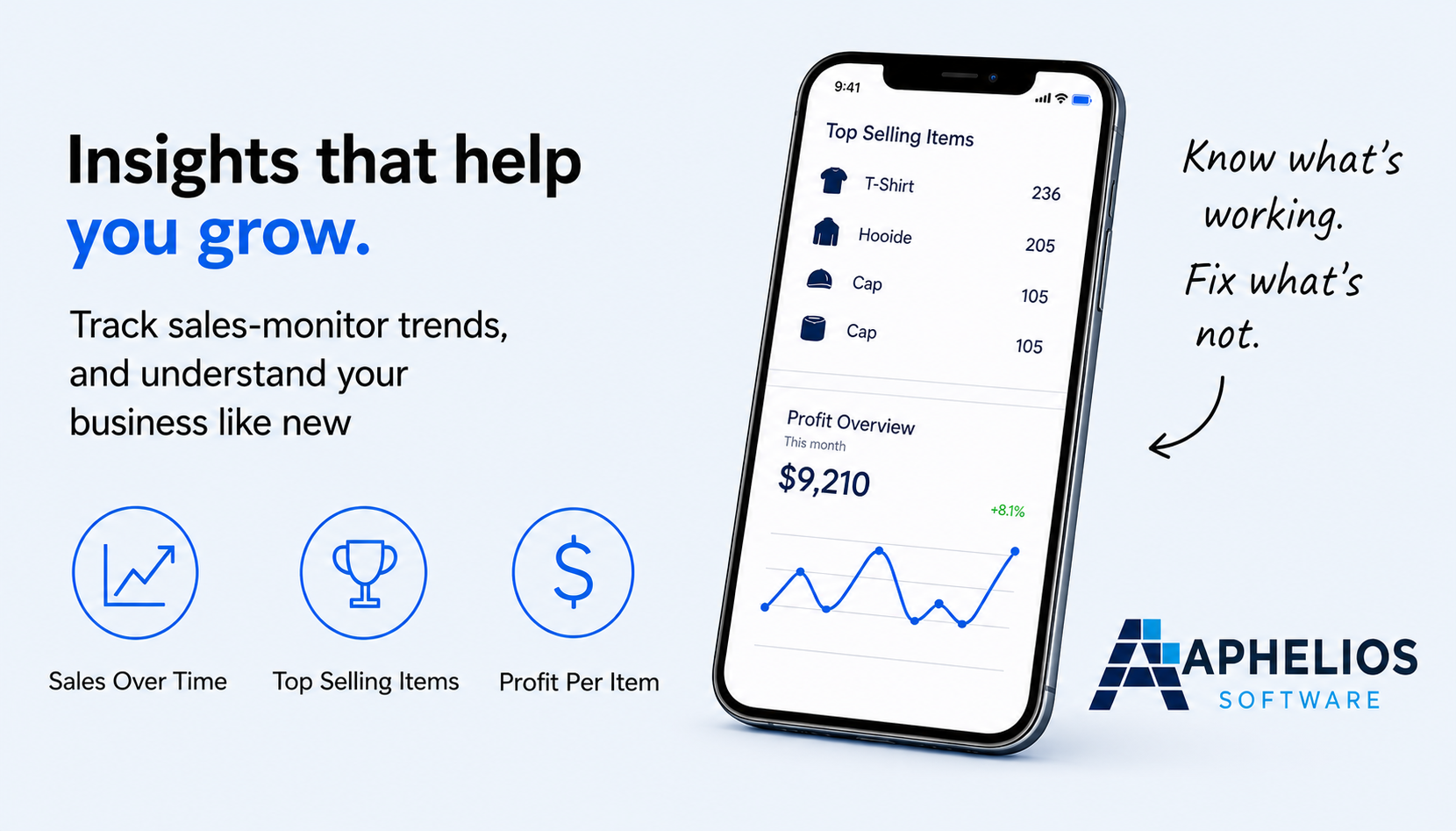
Modern cloud POS systems continue working offline and sync automatically when reconnected
One of the most common concerns about cloud POS is reliability when the internet goes down. However, this concern is largely outdated. Modern cloud POS systems like Aphelios Software include sophisticated offline mode: transactions continue to be processed locally during an internet outage, and all data is automatically synced to the cloud when the connection is restored. Staff see no disruption to their workflow, and no transactions are lost.
This means you get all the benefits of cloud-based operation: real-time sync across locations, automatic updates, remote access and integrated payments: without sacrificing the reliability of local processing during temporary outages. For most UK businesses, a modern cloud POS with offline mode is more reliable than a traditional system that relies on a single local server that can fail, be damaged or become corrupted.
Security Comparison: Cloud vs Traditional
Data security is a critical consideration for any POS system. Here is how the two approaches compare:
- Cloud POS: All data is encrypted with 256-bit SSL in transit and at rest. Data is stored in UK-based Microsoft Azure data centres with enterprise-grade physical security, automatic backups, redundant servers and 99.9% uptime SLAs. Security patches are applied automatically by the provider. GDPR compliance is managed by the provider.
- Traditional POS: Data security depends entirely on your own IT infrastructure. If the local server fails without a recent backup, data can be permanently lost. Security patches require manual installation. Physical theft of the terminal or server can result in data breaches. GDPR compliance is your sole responsibility.
For UK small businesses without dedicated IT staff, cloud POS offers significantly better security with zero additional effort.
Which Should You Choose?
For the vast majority of UK small businesses in 2026, cloud POS is the better choice. The lower upfront costs, real-time data sync, automatic updates, built-in integrations and enterprise-grade security far outweigh the advantages of traditional systems. Cloud POS is particularly well-suited to:
- Independent retail shops and boutiques.
- Multi-location retailers who need real-time stock synchronisation.
- Market traders and pop-up shops who need flexibility and low upfront costs.
- Food trucks and event vendors operating in different locations each day.
- New businesses starting out who want to minimise initial investment.
- Any business that wants to avoid vendor lock-in with expensive proprietary hardware.
Traditional POS may still be appropriate for very large operations with specialised hardware requirements, limited or unreliable internet connectivity, or specific industry compliance needs that mandate on-premise data storage. However, for most UK small businesses, the flexibility, affordability and features of modern cloud POS make it the clear winner in 2026.
Aphelios Software is a cloud POS platform designed specifically for UK small businesses, combining point-of-sale functionality with inventory management, CRM, invoicing, purchasing and payment processing in one integrated system: with offline mode and UK data hosting included. See our POS system page for the full feature list.
Switch to Cloud POS Today
Try Aphelios free for 14 days and discover how cloud POS can transform your business. No hardware needed, no commitment required.
Start Free Trial