Inventory Forecasting for Small Business UK – Complete Guide (2026)
Written by Calvin Lo, Founder of Aphelios Software | July 2026 | 8 min read
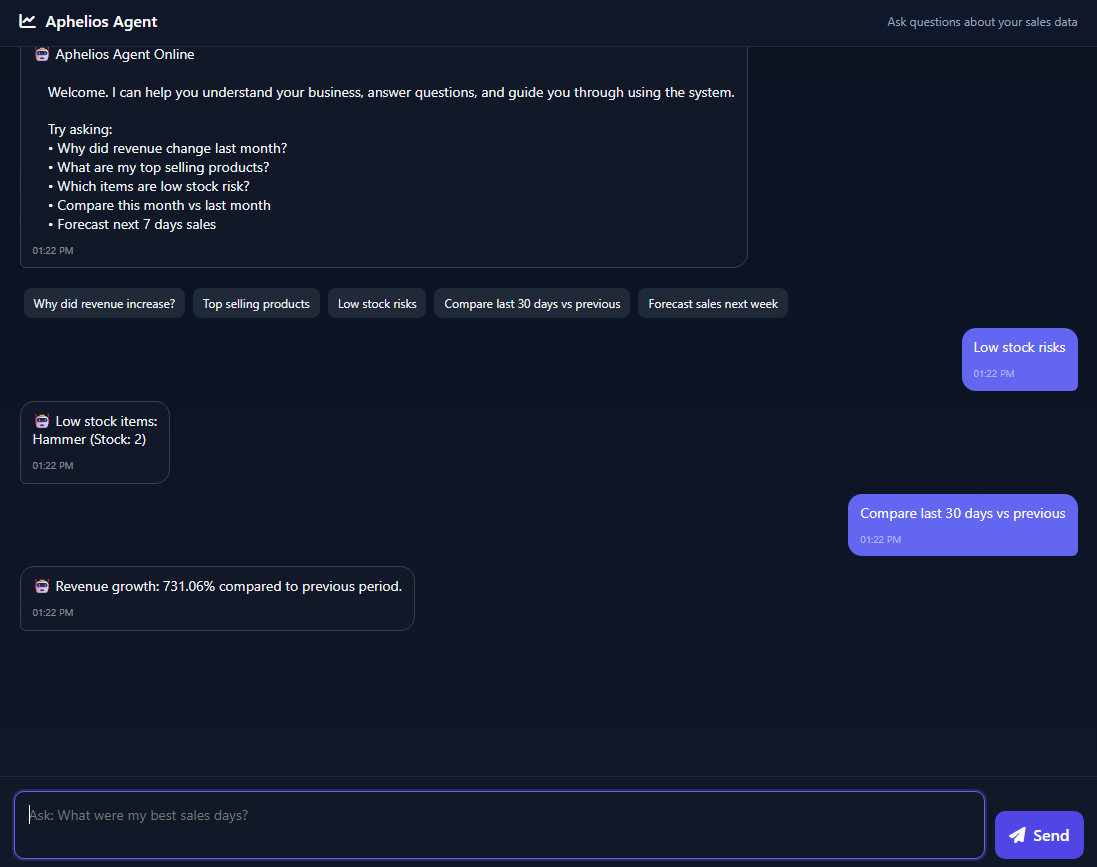
Inventory forecasting is one of the most powerful tools a small business can use to improve cash flow, reduce waste and keep customers happy. By predicting future demand with reasonable accuracy, you can order the right amount of stock at the right time: avoiding both costly stockouts and expensive overstocking.
This guide explains inventory forecasting for UK small businesses, covering the key methods, metrics and tools you need to forecast demand effectively in 2026.
What Is Inventory Forecasting?
Inventory forecasting is the process of predicting future product demand using historical sales data, market trends and seasonal patterns. The goal is to determine how much stock you will need over a specific period: typically weeks or months ahead: so you can purchase the right quantities without overstocking or running out.
For UK small businesses, accurate forecasting is particularly important because cash flow is often tight and storage space is limited. Ordering too much stock ties up capital in unsold products, while ordering too little means missed sales and disappointed customers.
Why Inventory Forecasting Matters for Small Businesses
- Reduce stockouts: Avoid running out of popular products during peak demand periods by anticipating when stock will run low and reordering in time.
- Minimise overstocking: Reduce the amount of capital tied up in slow-moving inventory and avoid costly markdowns or dead stock write-offs.
- Improve cash flow: By ordering precisely what you need, you free up cash for other business priorities such as marketing, equipment or staffing.
- Optimise storage space: Carry less excess stock, freeing up valuable storage space for products that sell faster and generate more revenue.
- Plan for seasonality: Prepare for predictable demand spikes during Christmas, summer holidays, bank holidays and other seasonal events.
- Make data-driven decisions: Base your purchasing decisions on actual sales data rather than gut feeling, leading to more profitable outcomes.
Key Inventory Forecasting Methods
1. Historical Sales Analysis
The simplest and most common forecasting method uses past sales data to predict future demand. If a product sold 100 units per month on average over the last six months, you can reasonably forecast similar demand going forward: adjusted for growth trends, seasonality and known changes such as price increases or new competitors.
2. Trend Forecasting
Trend forecasting identifies upward or downward sales patterns over time. If your business is growing at 10% per month, your forecast should account for this trajectory rather than relying on simple averages. Modern inventory software like Aphelios includes trend analysis that automatically adjusts forecasts based on recent sales momentum.
3. Seasonal Forecasting
Many UK businesses experience significant seasonal fluctuations. A garden centre sells vastly different volumes in April vs November. Seasonal forecasting uses data from the same period in previous years to predict upcoming demand, taking the guesswork out of seasonal purchasing.
Essential Forecasting Metrics
- Lead time: The time between placing an order with your supplier and receiving the stock. If your supplier takes 14 days to deliver, you need to reorder at least 14 days before you expect to run out.
- Safety stock: Extra inventory kept on hand to protect against unexpected demand spikes or supplier delays. The right safety stock level balances protection against stockouts against the cost of holding extra inventory.
- Reorder point: The stock level at which you should place a new order. Calculated as (average daily sales × lead time in days) + safety stock. When stock reaches this level, it is time to reorder.
- Economic Order Quantity (EOQ): The optimal order quantity that minimises total inventory costs, including ordering costs and holding costs. EOQ helps you determine whether it is more efficient to order larger quantities less frequently or smaller quantities more frequently.
- Inventory turnover ratio: How many times your inventory is sold and replaced over a period. A high turnover ratio indicates strong sales and efficient stock management, while a low ratio suggests overstocking or slow-moving products.
Using Technology for Inventory Forecasting
Spreadsheets can handle basic forecasting calculations, but they quickly become unmanageable as your product range grows. Modern inventory management software automates the entire forecasting process:
- Sales data is collected automatically from your POS system.
- Trends and seasonality are calculated by the software.
- Reorder points and safety stock levels are updated in real time as sales patterns change.
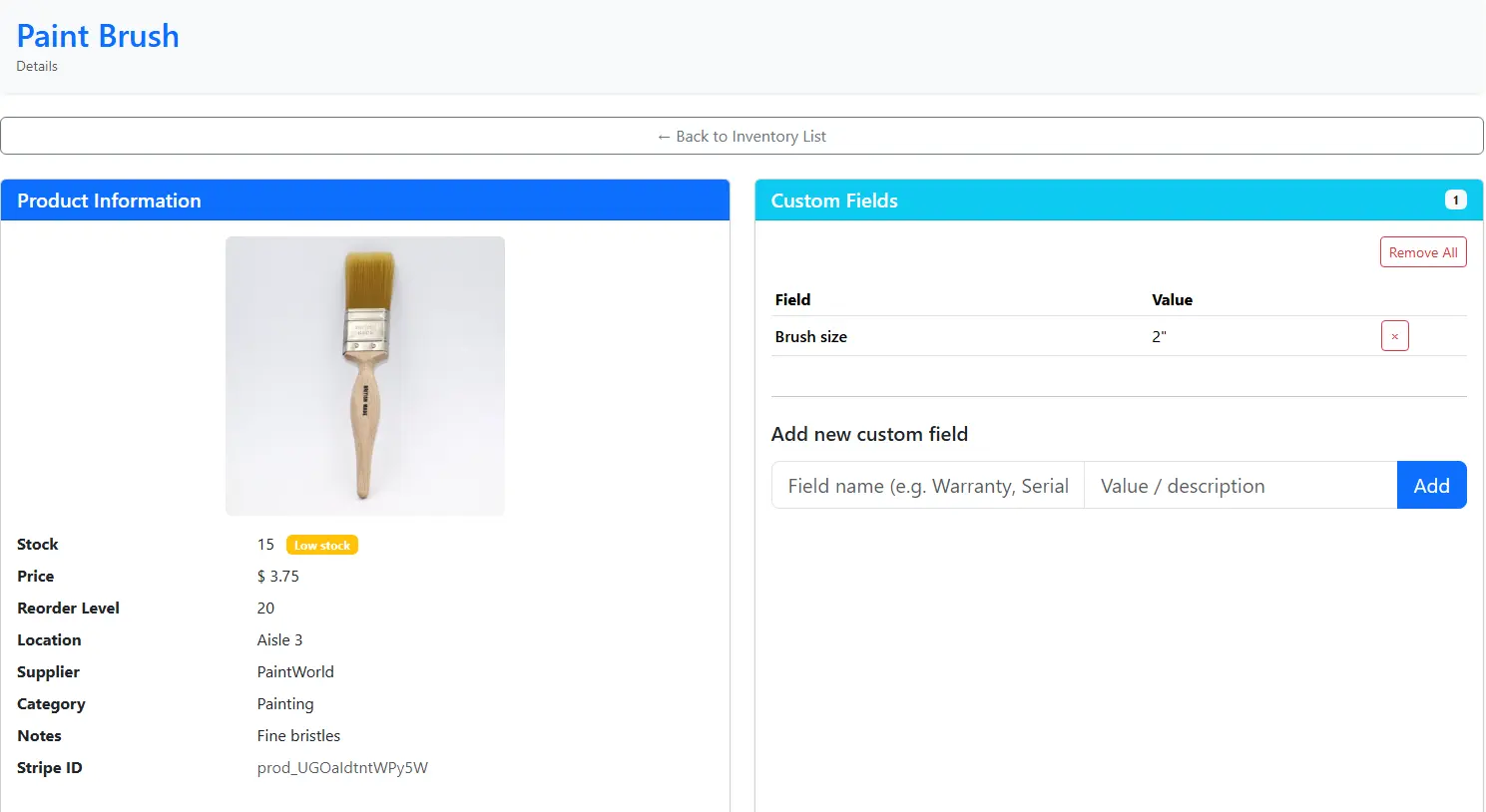
- Low-stock alerts are sent automatically when reorder points are reached.
- Forecast reports show projected stock levels weeks or months ahead, helping you plan purchasing with confidence.
Aphelios Software includes built-in inventory forecasting tools alongside an AI-powered Business Intelligence Assistant that provides conversational insights about your inventory trends, demand patterns and recommended reorder quantities: making advanced forecasting accessible to every small business owner.
Common Inventory Forecasting Mistakes
- Ignoring seasonality: Using annual averages without accounting for seasonal peaks and troughs leads to stockouts during busy periods and overstocking during quiet periods.
- Not updating forecasts regularly: A forecast created at the start of the year becomes less accurate as market conditions change. Review and update your forecasts at least monthly.
- Overlooking lead time variability: If your supplier sometimes delivers in 10 days and sometimes in 20, using the average of 15 days may leave you exposed. Factor in variability when calculating safety stock.
- Forecasting in isolation: Your forecasts should consider marketing campaigns, competitor activity, economic conditions and other external factors that influence demand.
- Relying solely on gut feeling: Even experienced business owners are often surprised by actual demand. Let data: not intuition: drive your purchasing decisions.
Inventory forecasting is not about perfect predictions: it is about making better decisions with the information available. By combining historical data, trend analysis and the right technology, UK small businesses can significantly reduce stock costs, improve cash flow and ensure popular products are always available when customers want them.
Related Articles
Inventory Replenishment Guide 2026
Optimise stock levels and avoid stockouts with effective replenishment.
Read moreAI Business Intelligence Assistant
Get conversational insights about your inventory and sales data.
Read moreAutomate Your Small Business
Automate inventory, sales and reporting with all-in-one software.
Read moreForecast Smarter with Aphelios
Start your free 14-day trial and discover how automated inventory forecasting can transform your business.
Start Free Trial