The Complete Guide to Cloud Business Software for UK SMEs 2026
Written by Calvin Lo, Founder of Aphelios Software | July 2026 | 8 min read
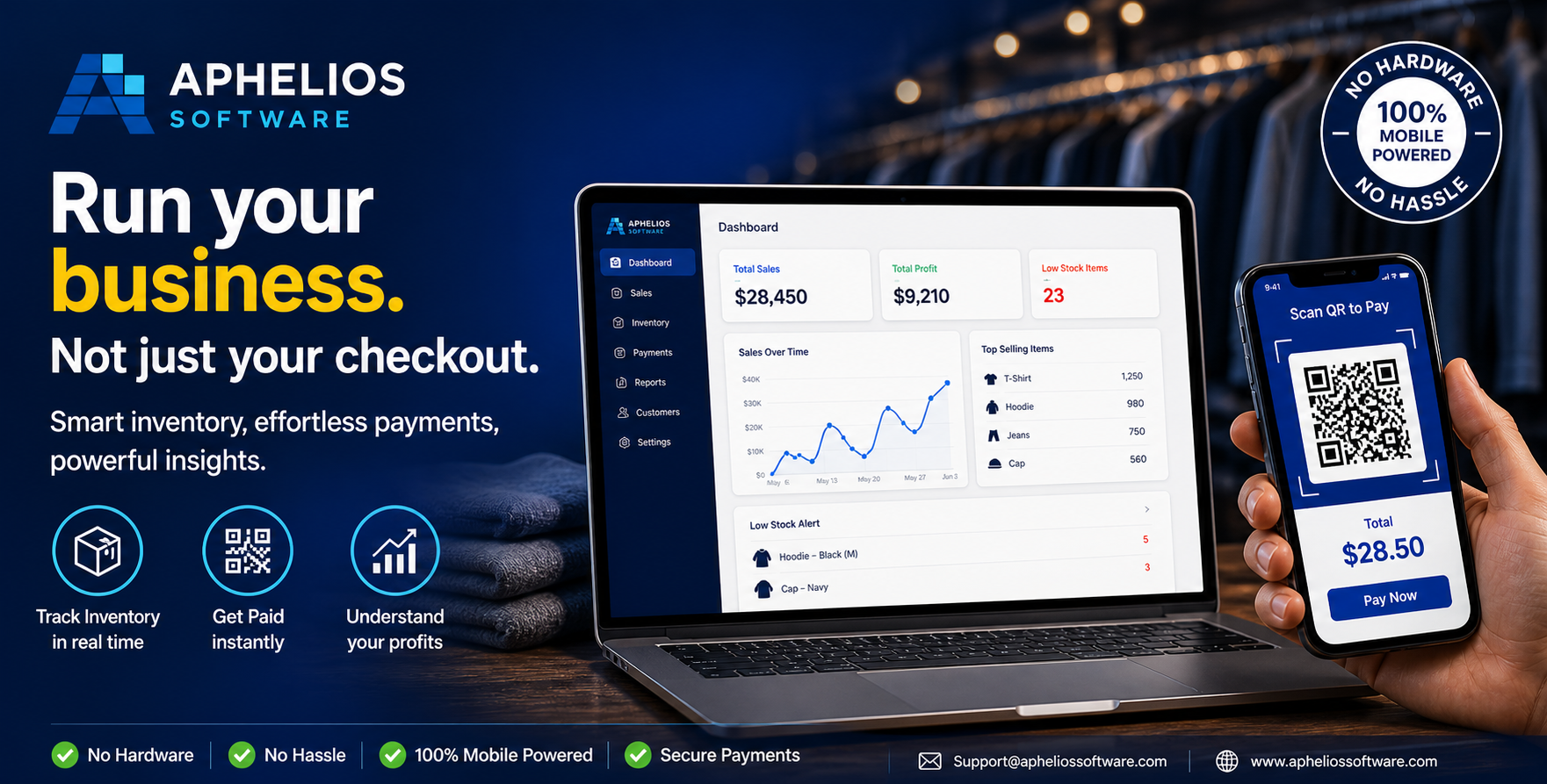
Running a small or medium-sized business in the UK means managing inventory, processing payments, serving customers, tracking finances and planning for growth: often all at the same time. For years, businesses handled these tasks using a patchwork of spreadsheets, separate software tools and manual processes that consumed hours every week.
Cloud business software has changed that. Instead of juggling multiple disconnected systems, UK SMEs can now manage their entire operation from a single cloud-based platform that works from anywhere on any device. This guide explains what cloud business software is, why it matters for UK SMEs, which core modules to look for and how to choose the right solution for your business.
What Is Cloud Business Software?
Cloud business software is a suite of applications that run on remote servers and are accessed through the internet rather than installed on individual computers. Instead of purchasing expensive software licences and maintaining on-premise servers, businesses pay a monthly subscription and access their tools through a web browser or mobile app.
For UK SMEs, cloud business software typically combines several essential business functions into one integrated platform: inventory management, point of sale, customer relationship management, invoicing, purchasing and reporting. Because everything runs in the cloud, data flows seamlessly between modules. A sale made on the POS instantly updates inventory, records the customer transaction, generates a receipt and feeds into your financial reports: all without any manual data entry.
The cloud model offers significant advantages over traditional on-premise software. There is no expensive hardware to buy, no software to install on every device and no IT team required to maintain servers. Updates and security patches are applied automatically by the provider, and your business data is backed up continuously so you never lose critical information.
Key Benefits for UK SMEs
Anywhere Access
Cloud software works from any device with an internet connection. Business owners can check stock levels from home, managers can review sales while travelling and staff can process transactions from market stalls or pop-up locations. This flexibility is essential for UK businesses that operate across multiple locations or sell at events and markets.
Automatic Updates
Every user automatically receives the latest features and security improvements without needing to install anything. This means your business always runs on current software without the disruption and cost of manual upgrades. New features become available the moment they are released.
Enterprise-Grade Security
Cloud providers invest heavily in security infrastructure that individual small businesses could never afford. Data is encrypted in transit and at rest, systems are monitored around the clock and regular security audits ensure compliance with UK data protection regulations including GDPR. Automatic backups protect against data loss from hardware failure, theft or human error.
Scalability
Cloud platforms grow with your business. Start with the features you need today and add new modules, user accounts and locations as your operations expand. There is no need to migrate to a new system or invest in additional hardware when your business grows.
Lower Total Costs
Cloud software eliminates the large upfront costs associated with traditional business systems. There is no server hardware to purchase, no software licences to renew annually and no IT support contracts to maintain. A predictable monthly subscription covers everything including hosting, maintenance, backups and support. For most UK SMEs, this represents a fraction of the cost of running separate systems for each business function.
Core Modules to Look For
The best cloud business software platforms provide multiple integrated modules within a single system. Here are the core modules that UK SMEs should look for.
Inventory Management
Real-time stock tracking across all locations with barcode scanning support, automated low-stock alerts, purchase order generation and multiple costing methods. The inventory module should update automatically with every sale, purchase and stock transfer so you always have accurate stock levels without manual counting.
POS System
A modern cloud POS should process sales quickly, accept contactless card payments through Stripe integration, support multiple payment methods and work offline when internet connectivity is unavailable. The POS must update inventory in real time and integrate with your customer and reporting modules.
CRM (Customer Relationship Management)
A CRM software module tracks customer purchase history, contact details and preferences. It helps you build stronger relationships by understanding buying patterns, following up on quotes and identifying your most valuable customers. For UK SMEs, having CRM data linked directly to your POS and invoicing systems eliminates the need for separate customer databases.
Invoicing
Professional invoicing with automated generation, recurring billing for regular customers and integrated payment collection. The invoicing module should pull customer and product data directly from your CRM and inventory systems, ensuring accurate invoices without manual data entry.
Purchasing
Supplier management, purchase order creation and stock replenishment tools that integrate directly with your inventory data. Automated reorder points trigger purchase order suggestions based on sales velocity and minimum stock levels, preventing stockouts without constant manual monitoring.
Reporting
Real-time dashboards and detailed reports covering sales performance, inventory valuation, profit margins, customer analytics and financial summaries. Reporting should be automatic: data flows into reports as transactions occur, giving you up-to-date business intelligence without manual data consolidation.
All-in-One vs Separate Tools
Many UK SMEs start by using separate tools for each business function: one system for inventory, another for POS, a different app for CRM and spreadsheets for reporting. While this approach works initially, it creates significant problems as the business grows. Here is how the two approaches compare.
| Approach | Monthly Cost | Integration | Learning Curve | Scalability |
|---|---|---|---|---|
| All-in-One Cloud Platform | 15 - 50 | Automatic data sync across all modules | Single interface to learn | Add users and locations easily |
| Separate Tools | 80 - 250+ | Manual data transfer or fragile integrations | Multiple systems to learn | Complex and expensive to scale |
Separate tools create data silos where information does not flow between systems. A sale on your POS does not automatically update your inventory system. A customer interaction in your CRM is disconnected from their purchase history. A stock replenishment in your purchasing tool does not reflect in your reporting. These gaps lead to errors, wasted time and poor decision-making.
An all-in-one platform eliminates these problems by keeping all your business data in a single system where every module shares the same information. This means fewer errors, less manual work and a complete view of your business at all times.
How Aphelios Provides Everything in One Platform
Aphelios Software is a cloud business platform built specifically for UK SMEs. It combines every core business module into a single integrated system that runs from the cloud on any device.
With Aphelios, your inventory management, POS system, CRM, invoicing, purchasing and reporting all work together automatically. A sale made at your market stall instantly updates your stock levels, records the customer purchase, updates your sales reports and processes the Stripe payment. When stock runs low, automated purchase order suggestions are generated based on your sales velocity and reorder thresholds. Your invoicing pulls customer and product data directly from the system with zero manual data entry.
Aphelios supports multiple stores, market stalls and warehouses from one dashboard. Whether you operate a single retail shop, a growing chain or a collection of market stalls, the platform scales with your business without requiring additional systems or expensive upgrades.
- Real-time inventory tracking with barcode scanning and multiple costing methods
- Cloud POS with Stripe payment integration and offline mode
- CRM with customer purchase history and quote management
- Professional invoicing with recurring billing
- Purchasing with automated reorder points and supplier management
- Real-time dashboards and detailed business reports
- AI Business Intelligence Assistant for natural language insights
- Multi-location support from a single account
With a free 14-day trial and no credit card required, UK SMEs can experience the full platform before committing. Plans start at £0: see the pricing page for full details, and start today at app.apheliossoftware.com to see how much time and money an all-in-one cloud platform can save your business.
Frequently Asked Questions
Is cloud business software secure for UK SMEs?
Yes. Reputable cloud platforms use bank-level encryption, multi-tenant data isolation, regular security audits and compliance with UK GDPR and data protection regulations to keep your business data safe. Your data is encrypted both in transit and at rest, and automatic backups ensure nothing is lost.
Do I own my data if I use cloud software?
Yes. You retain full ownership of your business data. Most providers allow you to export your data at any time in standard formats, so you are never locked in to a single platform. Your data belongs to you regardless of which subscription plan you use.
How long does it take to migrate to cloud business software?
Most UK SMEs can complete migration within one to two weeks. Simple setups with a few hundred products may be live in a few days, while larger businesses with extensive data typically migrate within two weeks with provider support. Many platforms offer guided onboarding and data import tools to make the process as smooth as possible.
How much does cloud business software cost for a small business?
Pricing varies by provider and features. Many platforms offer free tiers or plans starting from around 15 to 30 per month. All-in-one solutions typically cost less than subscribing to separate inventory, POS, CRM and invoicing tools, making them the most cost-effective option for most UK SMEs.
Related Articles
All-in-One Business Software UK 2026
Discover how unified software simplifies running your entire business.
Read moreSmall Business Automation 2026
Automate inventory, sales, and reporting with all-in-one software.
Read moreWhat Is Inventory Management Software?
Learn how inventory software helps UK businesses stay organised.
Read moreManage Your Entire Business from One Cloud Platform
Join thousands of UK SMEs using Aphelios to manage inventory, process sales, track customers and run reports from a single cloud platform. Start your free 14-day trial today.
Start Free Trial