CRM for Ecommerce UK 2026 – Customer Management, Marketing & Sales Guide
Written by Calvin Lo, Founder of Aphelios Software | Updated July 2026 | 8 min read
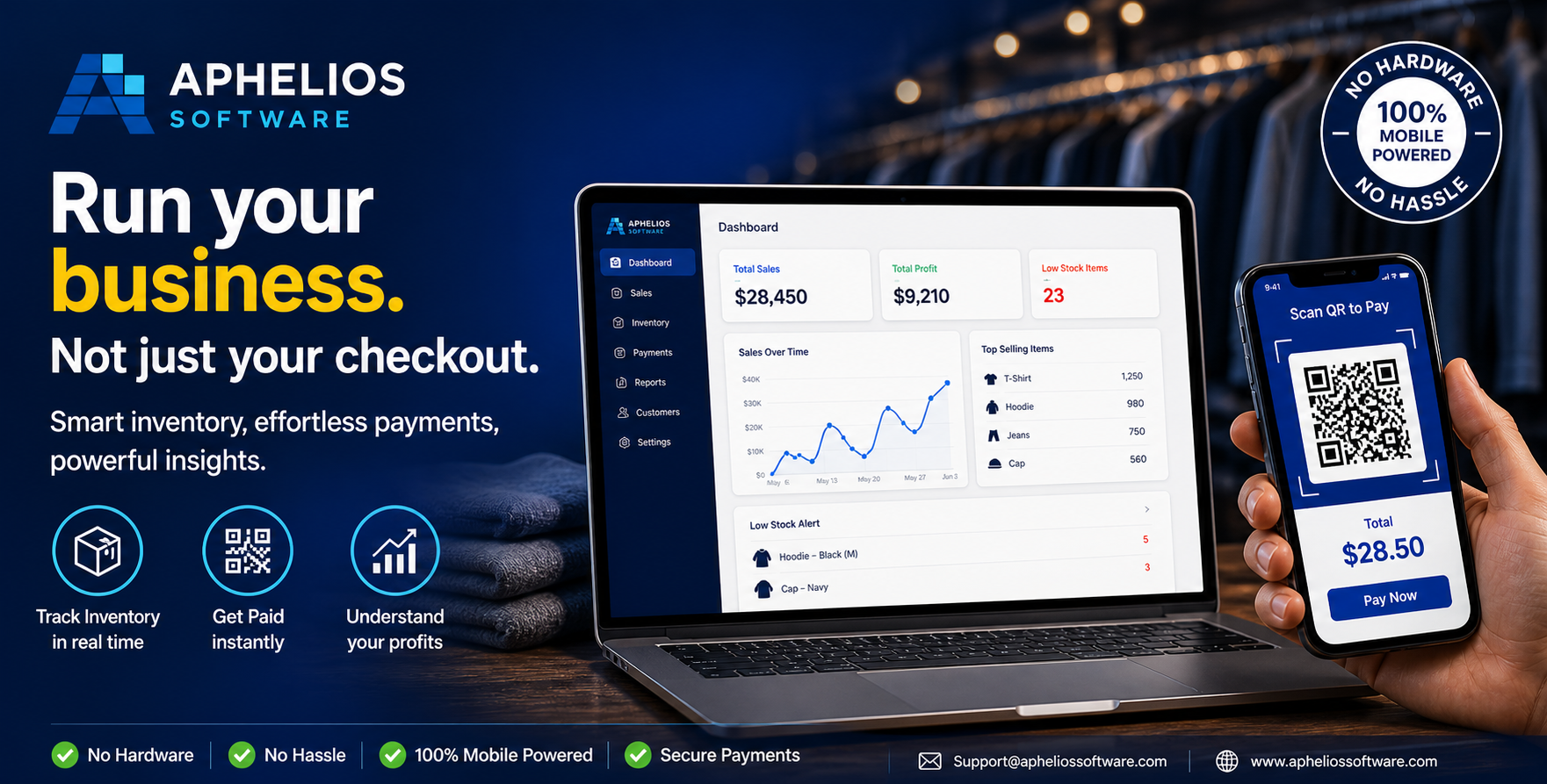
CRM dashboard centralising ecommerce customer data and sales analytics
Running an ecommerce business in the UK means managing customers across multiple channels: your website, Amazon, eBay, Etsy, social media and potentially a physical shop or market stall. Without a central system, customer data becomes fragmented and you miss opportunities to personalise marketing, identify repeat buyers and maximise customer lifetime value.
This guide explains how UK ecommerce businesses use CRM for ecommerce to manage customer relationships, automate marketing campaigns, track purchase behaviour and increase sales. Whether you sell on your own website, online marketplaces or across multiple channels, the right CRM transforms your customer data into a competitive advantage.
Why Ecommerce Businesses Need CRM Software
Ecommerce businesses generate vast amounts of customer data: names, email addresses, purchase history, browsing behaviour, support interactions and more. Without a CRM, this data stays locked inside individual platforms, making it impossible to see the full picture of each customer relationship. A CRM centralises every interaction and transaction into a single customer profile.
The practical benefits for UK online sellers include:
- Single customer view: see every order, enquiry and interaction across all sales channels in one place.
- Personalised marketing: send targeted email campaigns based on purchase history, preferences and behaviour.
- Automated follow-ups: trigger abandoned cart reminders, post-purchase thank-you emails and re-engagement campaigns automatically.
- Customer segmentation: group customers by total spend, order frequency, product preferences or location for targeted promotions.
- Lifetime value tracking: identify your most valuable customers and create loyalty programmes to retain them.
For UK ecommerce businesses operating under GDPR regulations, a CRM also helps you manage customer consent, data access requests and record-keeping requirements more effectively than scattered spreadsheets and platform-specific tools.
Managing Customer Data Across Multiple Sales Channels
One of the biggest challenges for UK ecommerce sellers is managing customers who interact with your brand across multiple channels. A customer might discover your products on Instagram, browse your website, purchase through Amazon and then contact you via email about a return. Without a CRM, each of these interactions happens in isolation and you never build a complete picture of that customer.
The Aphelios CRM platform addresses this by providing a unified customer record that aggregates purchase history, communication logs and support interactions regardless of which channel the customer used. When a repeat buyer contacts you, your team can see their full history: past orders, preferences, previous enquiries and current open issues. This level of context transforms customer service from reactive to personalised.
For businesses selling both online and in person at markets or pop-up shops, an integrated CRM that connects with your POS system is especially valuable. Customer relationships started at a physical stall can be continued online through email marketing, and online customers can be identified when they visit your physical location.
Automating Marketing Campaigns with CRM Data
Marketing automation is one of the most powerful features of a CRM for ecommerce. By connecting your customer data with email marketing capabilities, you can create automated campaigns that deliver the right message to the right customer at the right time. No more manually exporting email lists and sending generic newsletters to your entire database.
Effective automated campaigns for UK ecommerce businesses include:
- Welcome series: automatically send a sequence of emails to new subscribers introducing your brand and best-selling products.
- Abandoned cart recovery: trigger a reminder email when a customer adds items to their cart but does not complete the purchase.
- Post-purchase follow-ups: send order confirmation, shipping updates and request reviews after delivery.
- Re-engagement campaigns: identify customers who have not purchased in 90 days and offer a discount to bring them back.
- Seasonal promotions: segment customers by past purchase behaviour and send targeted offers for holidays, sales events or new product launches.
Each campaign becomes more effective because it is based on real customer data rather than guesswork. A CRM with built-in email integration and campaign tracking allows you to measure open rates, click-through rates and conversion metrics directly alongside your customer records.
Personalising the Customer Experience at Scale
Personalisation is no longer a luxury: it is what customers expect. UK online shoppers are more likely to buy from brands that remember their preferences, recommend relevant products and communicate in a personalised way. A CRM makes personalisation scalable by automating the process of tailoring communications based on individual customer data.
With a CRM, you can personalise email content by including the customer's name, referencing their past purchases and recommending complementary products. You can also personalise the shopping experience by showing different product collections to first-time visitors versus repeat buyers. For businesses using Aphelios integrated CRM, customer segments based on purchase frequency, average order value and product categories can be created in minutes and used across marketing, sales and customer service functions.
Personalisation drives measurable results. Ecommerce businesses that implement personalised marketing campaigns see an average 20% increase in sales, according to industry benchmarks. When combined with loyalty programmes that reward repeat purchases, CRM-driven personalisation becomes a powerful engine for customer retention and revenue growth.
Tracking Customer Lifetime Value and Purchase History
Customer lifetime value (CLV) is one of the most important metrics for ecommerce businesses. It tells you how much revenue a customer generates over their entire relationship with your brand, helping you make informed decisions about marketing spend, customer service investment and product development. A CRM automatically calculates CLV by aggregating every transaction across all channels.
Beyond CLV, a CRM gives you visibility into purchase patterns that inform your business strategy:
- Repeat purchase rate: what percentage of customers buy from you more than once? Which products drive repeat purchases?
- Average order value: how much do customers spend per transaction? Which customer segments have the highest AOV?
- Purchase frequency: how often do customers buy? Are there seasonal patterns in purchasing behaviour?
- Product affinity: which products are frequently bought together? Use this data for cross-sell recommendations.
- Channel preference: which sales channels generate the most valuable customers? Where should you focus marketing efforts?
These insights enable you to make data-driven decisions about inventory purchasing, marketing budget allocation and customer retention strategies. Without a CRM, these metrics are difficult or impossible to calculate accurately for a multi-channel ecommerce business.
Integrating CRM with Your Ecommerce Platform
The value of your CRM depends on how well it integrates with your existing ecommerce systems. When your CRM is connected to your website, payment processor and inventory management, customer data flows automatically between systems: new orders create customer records, abandoned carts trigger follow-up campaigns and product data stays synchronised across sales channels.
For UK ecommerce businesses, important integrations include:
- Ecommerce platform: sync orders, customers and products between your website and CRM automatically.
- Payment processor: connect Stripe or other payment gateways to track transaction data and reconcile payments.
- Inventory management: ensure stock levels are updated in real time when orders are placed across any channel.
- Email marketing: integrate your email platform to send automated campaigns based on CRM segments.
- Accounting software: sync invoicing and payment data for accurate financial reporting.
An integrated platform like Aphelios eliminates the need for multiple separate integrations by combining CRM, inventory, POS and invoicing in one system. This reduces technical complexity and ensures data consistency across all business functions.
Choosing the Best CRM for Your UK Ecommerce Business
When evaluating CRM options for your ecommerce business, consider your specific needs: the number of sales channels you operate, whether you sell both online and in person, your budget, and the level of marketing automation you require. The right CRM should simplify your operations, not add complexity.
For UK ecommerce sellers who need an all-in-one solution that includes customer management, inventory tracking, multi-channel sales and payment processing, Aphelios CRM offers a complete platform from £69.99 per month (Pro plan) with no per-user fees. For businesses that only need standalone CRM, options like HubSpot and Zoho are worth exploring, though you will need separate systems for inventory, order management and marketing automation.
Read our full comparison in Best CRM Software for Small Business UK 2026 for detailed pricing and feature analysis across all major CRM platforms.
Related Articles
Lead Management & Quotes CRM UK 2026
Learn how to capture, score and convert leads with professional quoting.
Read moreCRM Software for Small Business UK 2026
Discover how CRM software helps UK businesses manage customer relationships.
Read moreCustomer Retention Strategies 2026
Proven strategies to retain customers and grow your UK small business.
Read moreTry Aphelios CRM Free for 14 Days
See how integrated CRM, inventory and sales management can simplify your business operations. No credit card required. UK hosted and GDPR compliant.
Start Free Trial